

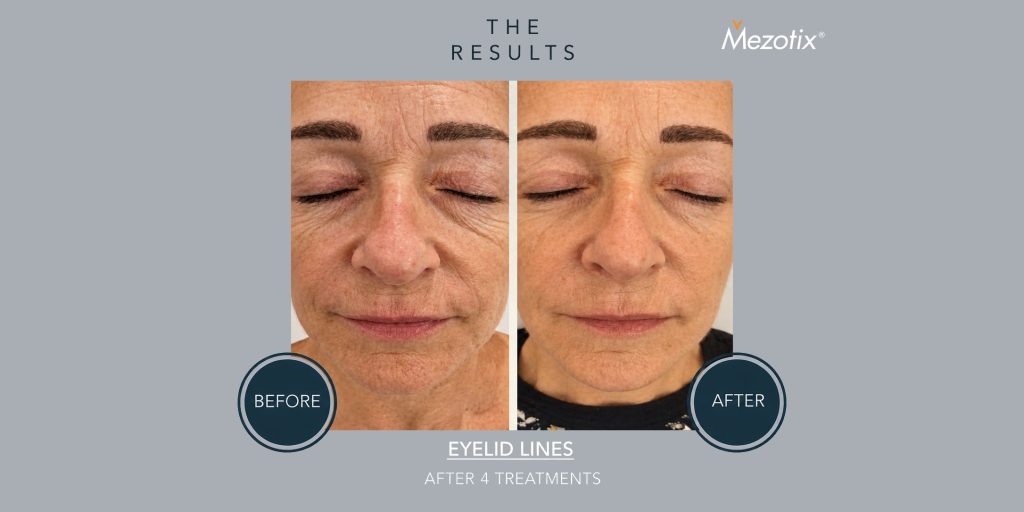
Crepey skin around your eyes: could Mezotix help?
Looking for an alternative to blepharoplasty (eyelid surgery)? Mezotix offers a non-surgical approach to eyelid rejuvenation, helping to tighten and firm delicate skin, improve crepiness and reduce the appearance of fine lines for a smoother, more refreshed eye area.
You might first notice crepey skins around the eyes when concealer settles into fine lines, or when the skin beneath your eyes looks crinkled even after moisturising. It can be difficult to disguise, and trying another eye cream may leave you wondering what else is worth considering.
Mezotix is one option to discuss. Before booking, it helps to understand which changes it is intended to improve, how those differ from dark circles or puffiness, and what treatment would involve for you.
Can Mezotix help crepey skin around the eyes?
Mezotix may help improve fine lines and crepey-looking skin around the eyes. It uses controlled heat to support skin renewal, with the aim of a smoother-looking eye area. Suitability and likely improvement need to be assessed individually.
At Little Foray, Mezotix eye rejuvenation is available as a treatment for the eye area. Your consultation helps us assess the changes you have noticed and whether Mezotix is a suitable option.
What is crepey skin under the eyes?
Crepey skin describes a thin, finely crinkled appearance, rather like the texture of crepe paper. You may notice a network of small lines beneath your eyes rather than one deeper crease.
Ageing, sun exposure and dryness can contribute, as explained in Cleveland Clinic’s guide to crepey skin. The under-eye area is one of the places where this texture commonly appears.
An assessment should also consider how your skin feels. If it is dry, tight or irritated, tell your therapist and bring details of your eye creams and other skincare. You do not need to work out the cause yourself before asking for help.
Are crepey skin, dark circles and eye bags the same concern?
They can appear together, but they describe different changes. Being specific helps you understand what a proposed treatment could improve.
| What you notice | What needs assessing |
| Fine lines and a crinkled surface | Skin texture, dryness and changes in firmness |
| Dark circles | Skin colour, irritation or shadows from the shape of the area |
| Puffiness or bags | Fullness that may involve fluid or changes in the tissues beneath the skin |
| Hollows beneath the eyes | The contour of the area and the shadows it creates |
Mayo Clinic explains that some apparent dark circles are shadows cast by puffiness or hollows. Its guidance on bags under the eyes also distinguishes fluid and underlying tissue changes from surface texture.
Improving fine lines may leave a different concern unresolved. A useful question to ask is: “Which part of what I see around my eyes do you expect this treatment to improve?”
How does Mezotix work around the eyes?
Mezotix delivers heat through brief contact between a heated titanium tip and the skin. The manufacturer’s explanation of Mezotix describes how this encourages skin renewal and collagen regeneration.
The manufacturer includes examples involving upper and lower eyelids and the surrounding eye area. Your therapist should confirm exactly which area is appropriate to treat in your case.
If an upper eyelid is drooping, especially if it affects your vision, see an optometrist or medical professional before choosing cosmetic treatment. An assessment of eyelid position is separate from a discussion about skin texture.
What results should you look for?
For crepey eye-area skin, the aim is an improvement in texture and the appearance of fine lines. Results develop over time, and the change will vary with your starting concern and treatment plan.
Agree a specific goal at your consultation. For example, you might want the skin beneath your eyes to look smoother when you are not wearing makeup. That gives you and your therapist something more useful to review than a general wish to look less tired.
You can view eye-area examples on our Mezotix treatment page. Ask how closely an example matches your own concern and when your progress should be assessed. Comparable lighting and facial expressions help when reviewing photographs.
What does a Mezotix eye appointment involve?
As listed in November 2026, Little Foray’s eye rejuvenation appointment is 45 minutes and costs £150. Numbing preparation and personalised aftercare guidance are included.
Before treatment, discuss the precise area, expected improvement, possible side effects and any recommended course. Share your medical history, medicines, sensitivities and previous procedures around the eyes. If the skin is currently irritated, mention it before the appointment.
Ask for the full cost of the proposed plan, including any optional additions, so you know what you are committing to.
What should you expect afterwards?
Typical downtime for Mezotix is zero to three days, with possible redness, warmth and dry or rough-feeling skin. Your therapist will explain what to expect specifically around your eyes.
Plan around occasions when you want to wear concealer or eye makeup. Your therapist should explain when to restart these products and your usual skincare, including any active ingredients.
If extra recovery support is appropriate, your therapist may discuss Dermalux LED light therapy. It is an option to assess as part of your plan, rather than something every eye treatment requires.
How to decide whether Mezotix is right for your eye area
- Show us the change that bothers you. Point out the fine lines, texture or other concern. Mention whether it looks different with makeup, in certain light or at different times of day.
- Bring your skincare and treatment history. A list or photographs of your products can help. Include previous eye-area treatments and any irritation or reactions.
- Ask for a clear recommendation. Understand the exact area to be treated, realistic improvement, recovery and total cost before deciding.
Sometimes the starting point may be hydration or a different treatment. Our facial and targeted eye treatments include an NCTF eye treatment focused on cleansing, gentle exfoliation and hydration. We can explain whether that approach or Mezotix better matches your skin’s needs.
Eye-area advice from Little Foray
At Little Foray Regenerative Skin & Wellness in Thames Ditton, our skin therapists build treatment plans around your concerns and skin history. Our team includes Saffron, a skin and laser specialist with more than 16 years’ experience in the beauty and aesthetics industry.
Your questions about Mezotix eye treatment
Can I have Mezotix just around my eyes?
Yes. Little Foray offers an eye-only Mezotix appointment. You can discuss this if the eye area is your main priority, without booking a full-face treatment.
Will Mezotix remove dark circles or eye bags?
Mezotix eye rejuvenation focuses on fine lines and skin texture. Dark circles, bags and hollows need their own assessment, because improving the skin’s surface may leave the main concern unchanged.
Is Mezotix eye treatment painful?
You may feel warmth or prickling. Little Foray includes numbing preparation, and your therapist will discuss comfort with you before starting. Let them know if you are particularly nervous about treatment near your eyes.
When can I wear eye makeup afterwards?
Avoid makeup immediately after treatment and follow your therapist’s instructions about restarting concealer, mascara and other products around the treated area. The right timing depends on your treatment and how the skin is recovering.
How many eye treatments will I need?
A course may be recommended, but the number and spacing should be agreed after assessing your skin.
Find out what could help your eye-area skin
Book a complimentary consultation at our Thames Ditton skin clinic to discuss crepey skin, fine lines and the changes you have noticed around your eyes. We will assess your concerns and explain whether Mezotix is a suitable next step, including the treatment plan, recovery and cost.